
Hemp Balms and Oils for Golfers: A Careful Recovery Conversation
Sore wrists, forearms, and shoulders are part of a lot of golfers’ routines. Here is the honest version of what hemp topicals can—and cannot—claim.
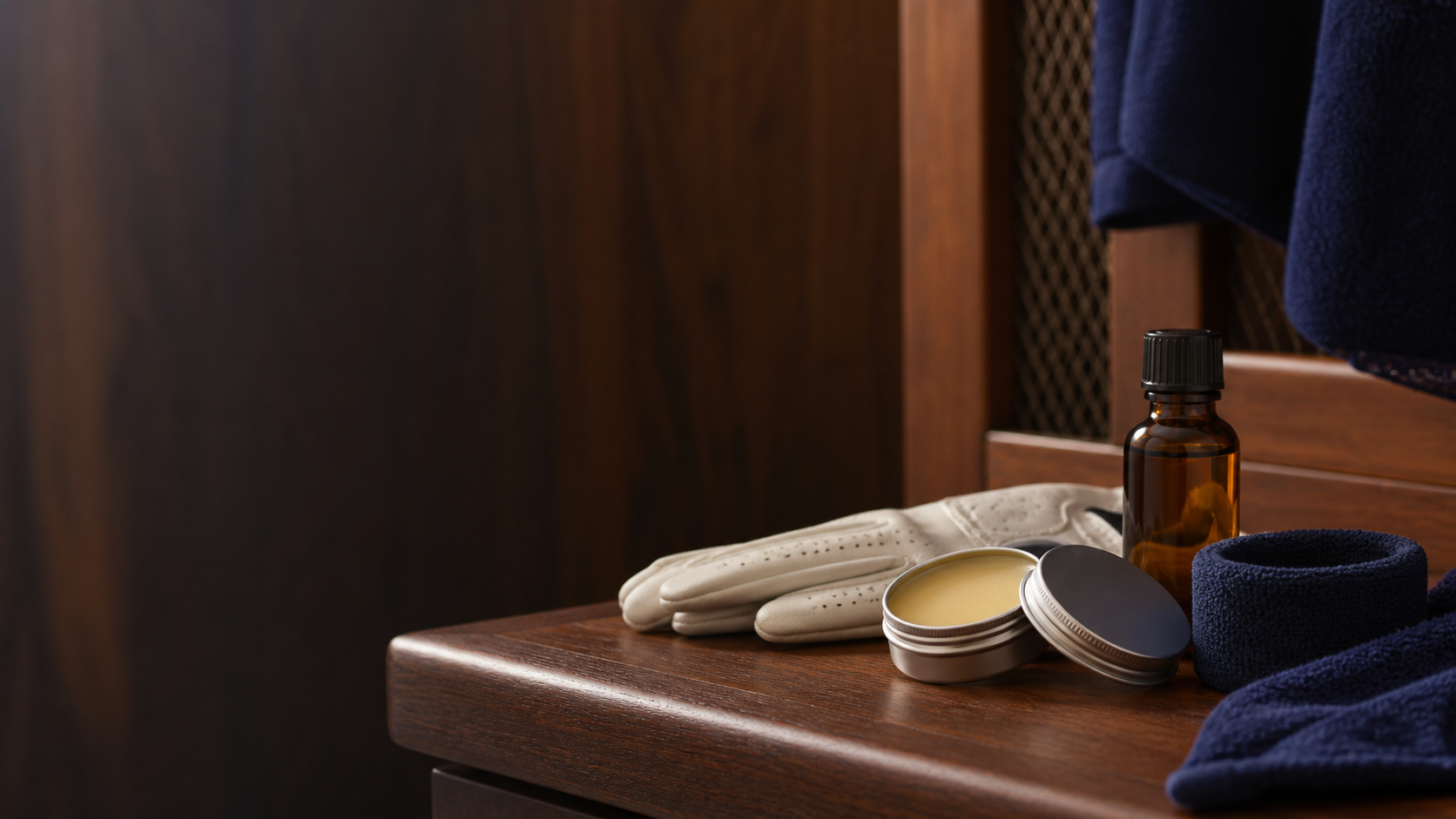
A long range session, a heavy week of practice, or one too many bunker rehearsals can leave a golfer’s wrists and forearms talking back. It is no surprise that hemp balms and CBD oils now show up in golf bags and recovery kits.
The honest answer is less flashy than the label copy: some people like these products as part of a recovery ritual, but they are not a proven treatment for a golf injury or inflammation.
Start with the distinction most labels blur
“Hemp,” “CBD,” and “THC-free” are not interchangeable promises. Hemp is a legal category defined by law; CBD is one compound that may be derived from hemp; and a product’s actual cannabinoid content depends on its formulation and testing.
Topical balm is applied to the skin. Oil may mean a topical oil, or it may mean a product meant to be swallowed or held under the tongue. Those are not the same exposure, not the same legal category, and not the same risk profile. Read the label before assuming.
What the evidence can support
Research on cannabis and cannabinoids has looked mostly at chronic-pain conditions and specific pharmaceutical products—not at a CBD balm for a golfer’s sore wrist after a round. The National Center for Complementary and Integrative Health says evidence for chronic-pain benefit is limited and mixed, while adverse effects are more common with cannabinoid products in studies.
That means we should not promise that a balm “reduces inflammation,” “heals tendonitis,” or “fixes golfer’s wrist.” Those are medical claims, and they can distract from getting a persistent injury evaluated.
A better recovery checklist
For routine post-round soreness, start with the unsexy fundamentals: pause the aggravating activity, adjust volume, check grip and setup, sleep, hydrate, and use a qualified clinician or golf professional when pain persists or changes your swing.
If an adult chooses a hemp topical, be a careful buyer:
- Choose a product with a batch-specific, independent certificate of analysis (COA).
- Confirm what the product contains, including THC, rather than relying on front-label phrases.
- Avoid products that promise to treat pain, inflammation, arthritis, or an injury.
- Patch-test a topical product first and stop using it if the skin reacts.
- Ask a clinician or pharmacist before using cannabinoid products if you take medications, are pregnant or nursing, or manage an ongoing condition.
The FDA has approved only one CBD-containing prescription product, for limited seizure conditions. It has also warned that CBD can carry safety risks and that some products marketed for pain have contained undeclared drug ingredients.
The Mile High standard
We like tools that help golfers take better care of the game—and their bodies. That also means being clear about the boundary: a recovery product can be a personal choice; it is not a substitute for medical care, and it should never be sold with a cure story attached.